
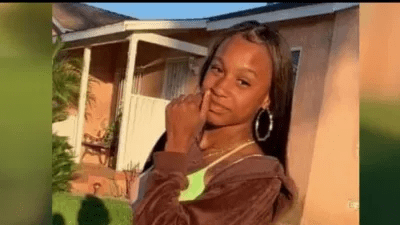
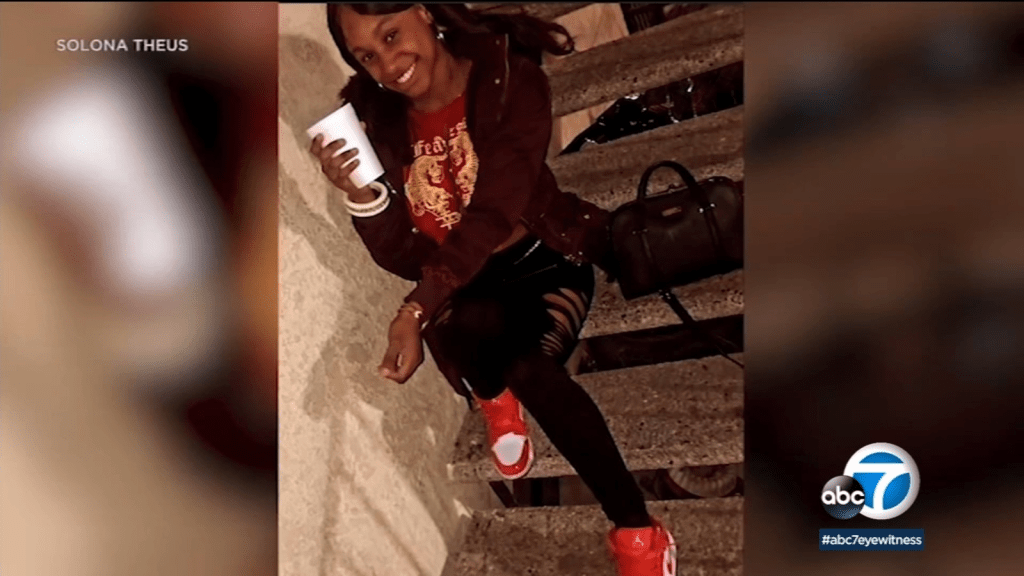
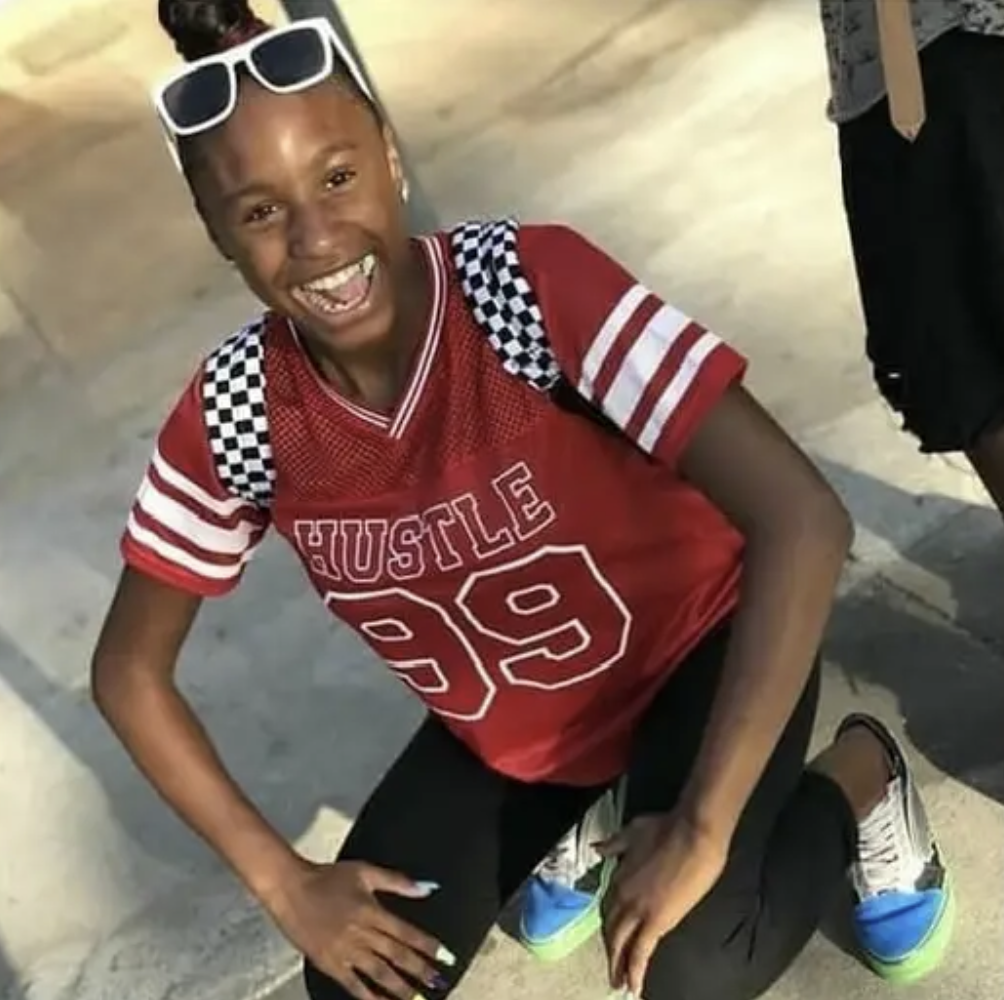
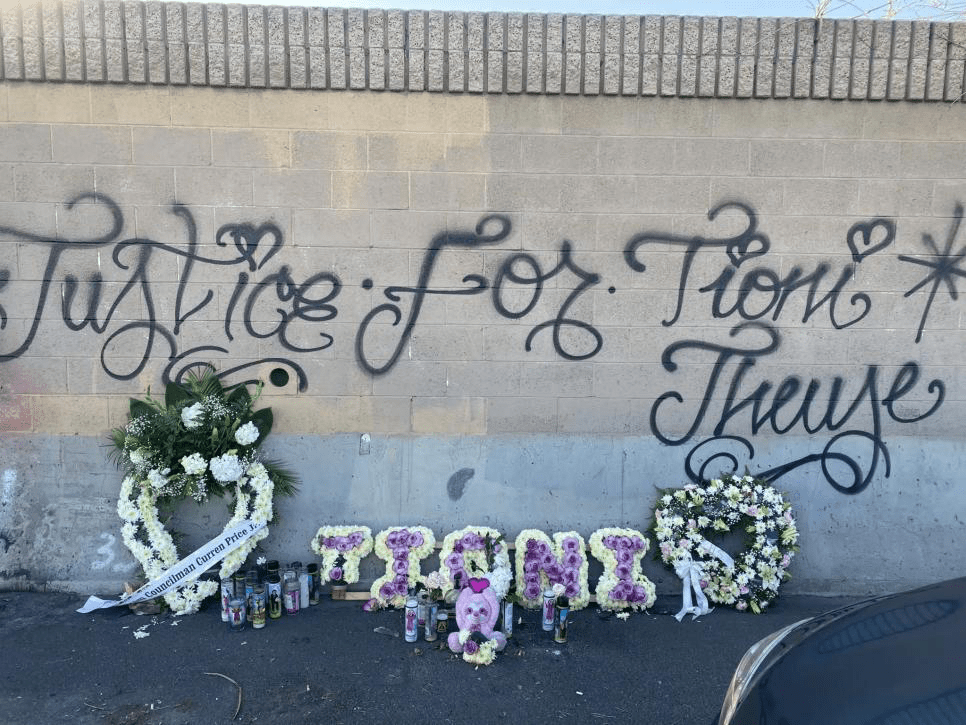
The Reward In Murder Of Compton Teen Tioni Theus has jumped to $110K. According to CBSLA the reward for information leading to the arrest of the person responsible in the shooting death of a 16-year-old girl, who was a straight A student, whose body was dumped alongside the 110 Freeway in South Los Angeles. Theus resided in Compton and attended Centennial High School, where she thrived at school, getting all As.
More than a year after the murder of 16-year-old golfer Tioni Theus, her case remains unsolved.
Tioni Theus was one of us. On the morning of Jan. 8, 2022, she was found dead on the side of the Harbor Freeway in Los Angeles with a gunshot wound to the neck. She was 16 years old. She was one of us. She was an aspiring golfer and had dreams of becoming a nurse to help people in need.
Tioni was bright, she was fierce and she was a teenager whose world was falling apart all around her. As is often the case, she started to hang out with the wrong crowd. She found a new circle of people on social media, some of them adult men. One in particular is known to have a history of prostituting underage girls. According to Los Angeles District Attorney George Gascón, there is evidence to suggest that Tioni may have been a victim of sexual exploitation. The area where she was found, specifically Figueroa Street, is known for prostitution. These women and girls are society’s easiest targets. Their deaths, especially when the victim is of color, have long been treated as an afterthought.
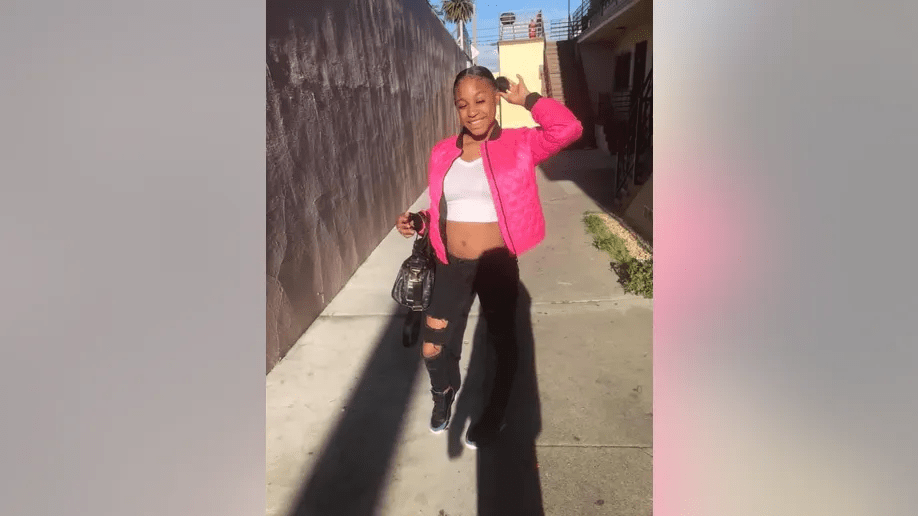
Tioni deserves justice, and her family, and law enforcement, needs our help. Someone had to see something on the morning of Jan. 8, 2022. Please come forward with any information you have. Even the smallest of details.
If you have information on Tioni Theus, please call the California Highway Patrol at (323) 644-9557.
To read more about human trafficking, click here or call (888) 373-7888.
For information on the epidemic of murdered and missing Indigenous women click here.
Tioni was found lifeless on a freeway on-ramp at 8 o’clock on a Saturday January 8th 2022 morning in a bustling city of millions, yet nobody has come forward to say what happened.
Tioni Theus was also a Black girl in the United States. That’s important to note because Black victims don’t get the same attention that white victims receive. News viewers are more interested in the missing or dead white woman. Social scientists call this missing white woman syndrome.
In her 16 years, Tioni Theus was known as a bright student and a joyful and charismatic friend. She loved golf, music, dance and being around her family. Everything changed when she was 13. “Tioni was in the car with my oldest daughter,” her Aunt Solona told me. “They were going to meet Tioni’s mother, Teresa, at an event to get the house keys so they could go back to the house. When they pulled up, they saw a body laying in the middle of the street. There was blood everywhere, and Tioni said to my daughter, ‘That’s my mother.’ My daughter tried to tell her it wasn’t, but Tioni said, ‘Yes it is. I know her purse and I know her shoes.’ So then my daughter calls me screaming: ‘Something happened to Teresa.’” That’s a lot for a 13-year-old girl. That’s traumatic.”
Tioni Theus and her cousin arrived to find her mother in 2019 had been struck by a vehicle, the victim of a hit-and-run. She was alive, but barely. Ambulances and the police arrived soon after. Tioni was sure her mother would die, but she survived the horrific accident. Police never found the driver, and the case of a Black woman being stuck by a car in broad daylight remains unsolved.
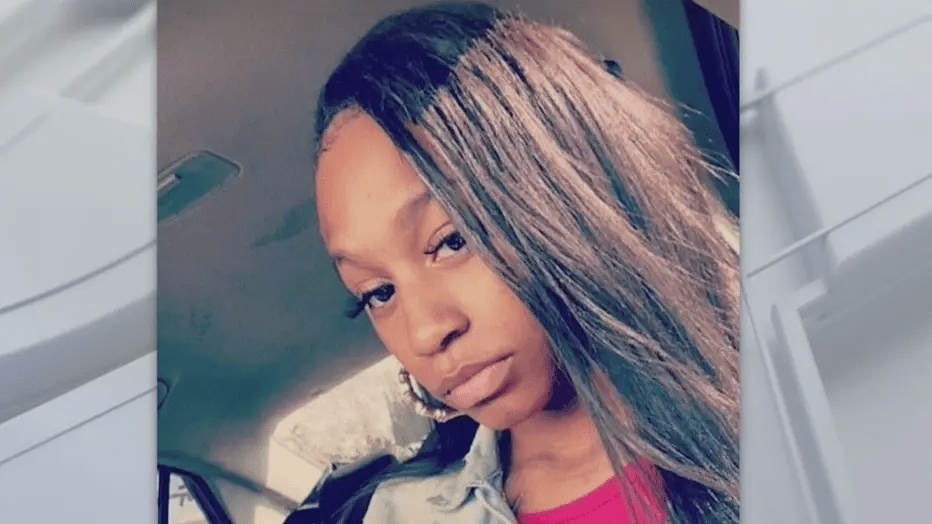
“We need the public’s help,” Gascón said. “Please help bring Tioni’s murderer to justice, and if you have any information, please contact the CHP.”
Last Saturday, a group of activists gathered and pushed for elected officials to offer a reward for information in the girl’s killing. They said then that the absence of a reward in the killing of the young Black girl stood in stark contrast to the $250,000 reward offered in the search for the killer of 24-year-old Brianna Kupfer, a Pacific Palisades resident and UCLA grad student who was fatally stabbed Jan. 13 inside a boutique furniture store in Hancock Park.
I first learned about Tioni’s story last Sunday, a year to the day after her death. I turned on the news and saw a picture of a young girl standing at a driving range with her clubs. It was Tioni. The news feature focused on how, a year later, there are no still no leads in the case.
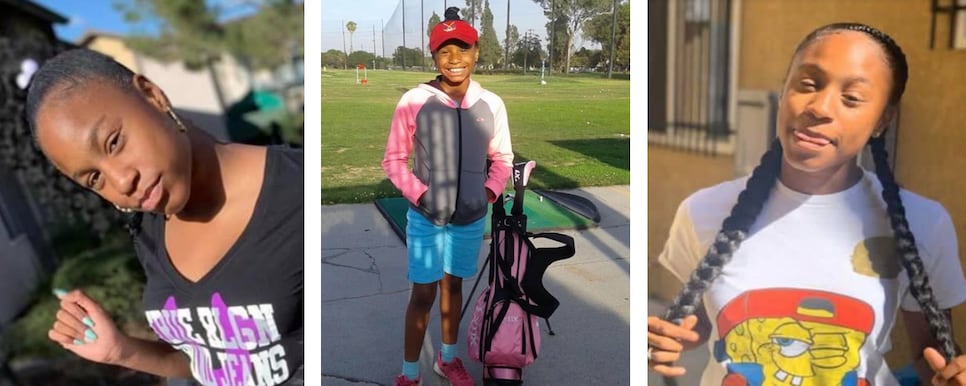
Tioni’s family reached out to community activist Najee Ali and other civic leaders to keep the case in the media.
“Tragically, another young woman was killed in Los Angeles at the same time of Tioni’s murder,” Ali says. “She was white. All of the news coverage was focused on her murder. There was no mention of Tioni. I called a press conference of Tioni’s family, including city leaders, to highlight the disparity in coverage. To the media’s credit they obviously realized what we were saying was true.” Erika D. Smith of The Los Angeles Times has been the strongest voice and advocate for justice for Tioni.

The driving range in the picture that was shown on the news looked familiar. It was at Hartwell Golf Course in Long Beach. I called Lisa Georgeson, an LPGA professional who has been at Hartwell teaching kids for 20 years. She knew Tioni, and she was emotional.
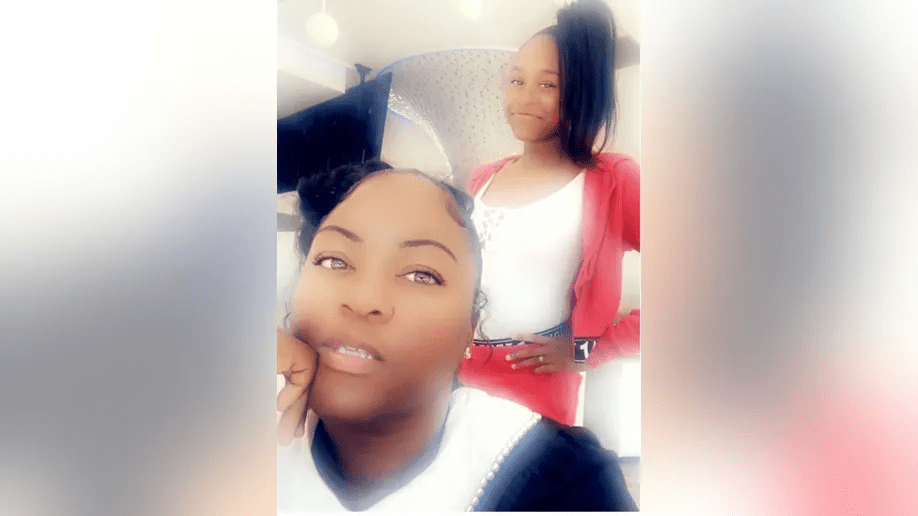
“I saw the news story this Sunday, as well,” Georgeson said. “I felt really badly that I had not been paying attention enough to know what had happened to her and her family. When I saw her and heard the name, I said, ‘Oh my God. She was one of our kids.’ Heartbreaking doesn’t begin to describe the kind of sadness I’m feeling.”
Tioni was last seen Jan. 7 after telling a family member she was going to meet a friend to go to a party, officials said. No further information was provided, and no suspect description was available.
The hardest call I made was to Tioni’s father, Darien Jackson. Tioni lived with her father, and he was the last family member to see her alive. “The last thing I told her was I loved her,” he said before pausing. “It’s hard, man. I want to hire a private investigator to get the case solved.” His pain was palpable with every word. Tioni is the second child Jackson has lost to violence. His son, Darien, was shot and killed in 2016 at age 19.
Because Tioni’s body was found on a highway on-ramp, the investigation into her murder is being led by the California Highway Patrol. The Los Angeles Police Department is assisting. I spoke to CHP Officer Alec Pereyda, who mentioned Tioni’s case is an ongoing investigation. He asked that anyone with information call (323) 644-9557.
The investigation is being handled by the CHP, but the LAPD offered investigative assistance. LAPD Chief Michel Moore told the Police Commission the CHP hasn’t yet identified a suspect and does not yet have a description of the suspect or involved vehicle.
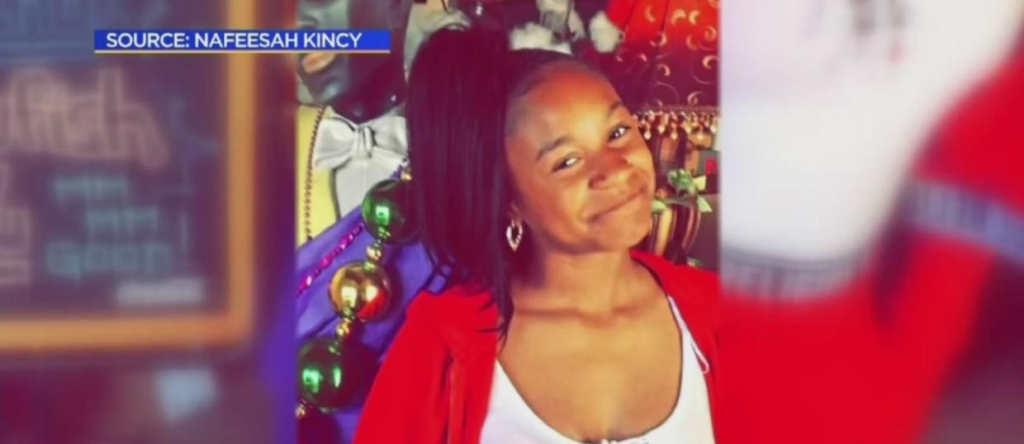
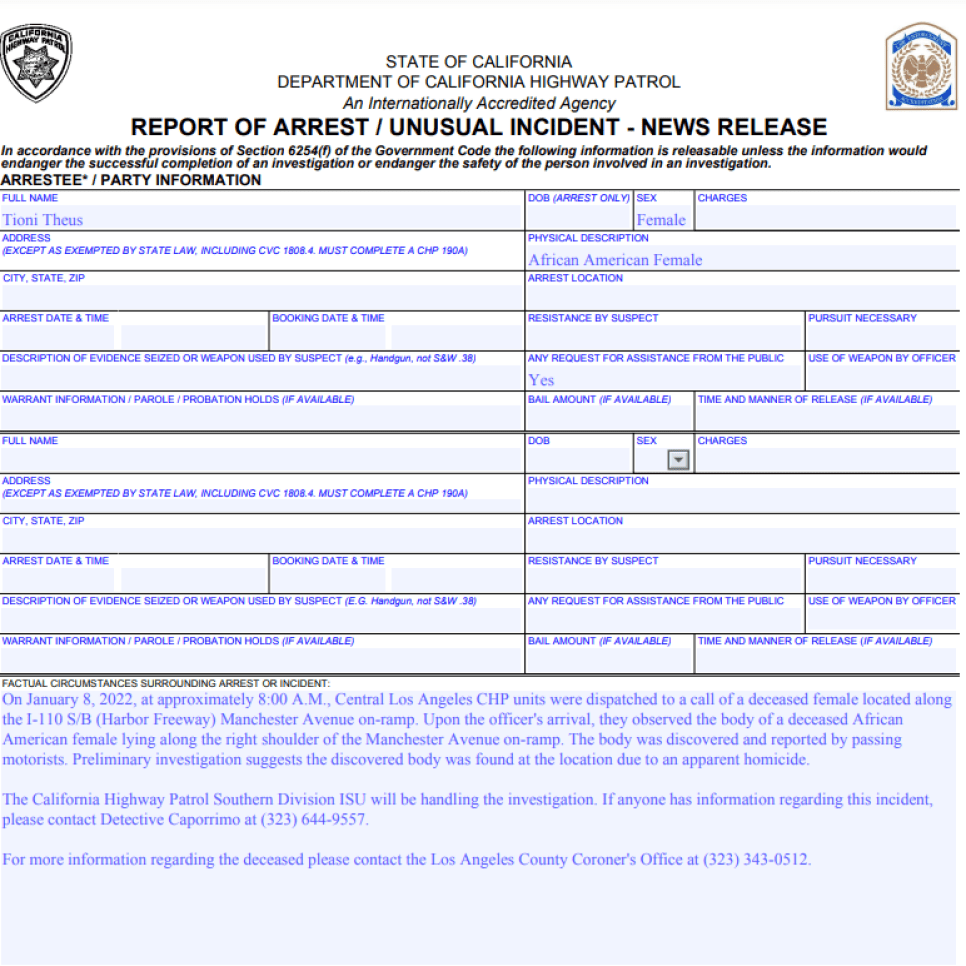
Tioni Theus’ body was discovered Jan. 8 on the side of the freeway on the Manchester Avenue on-ramp near South Figueroa Street.
During a news conference Wednesday, Assistant California Highway Patrol Chief Jesus Holguin said that California Gov. Gavin Newsom approved a $50,000 reward, which brings the total possible reward money being offered for the capture of Theus’ killer to $110,000, which includes another likely $50,000 pledged by the L.A. City Council, and $10,000 from L.A. County Board of Supervisors.
“We’re very confident that we’re moving forward in a positive direction and hopefully have some good news in the very near future,” Holguin said during a Zoom news conference in which L.A. County District Attorney George Gascon joined other elected officials.
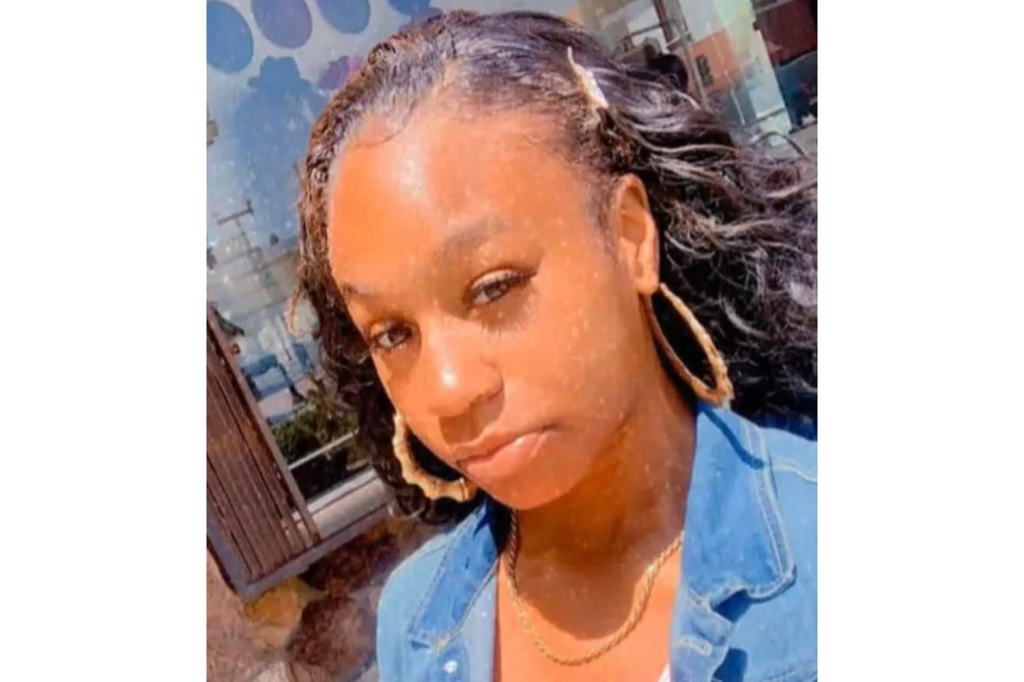
Gascon said there is evidence indicating that “this young girl may have been the victim of human trafficking,” and noted that the investigation into her death is ongoing.
On January 19th, the teen was laid to rest. According to the LA Times.
Nine days since Tioni’s family held a vigil in South L.A., desperate for more attention to help identify and arrest the teenager’s killer.
Six days since I wrote a column, pointing out the unfairness of the homicide investigation of Brianna Kupfer, a white woman from Pacific Palisades, being treated with far more urgency.
Two days since L.A. City Councilmembers Curren Price and Marqueece Harris-Dawson demanded the city put up a $50,000 reward for information in Tioni’s case, and since Supervisor Holly Mitchell secured a $10,000 reward from L.A. County.
One day since Gov. Gavin Newsom, at the request of Assemblyman Mike Gipson (D-Carson), approved $50,000 reward.
The same morning as L.A. Mayor Eric Garcetti issued a statement offering his “deepest condolences” to Tioni’s family.
And the same afternoon as Solona Theus, dressed in white with a purple beret, trudged toward the casket at the House of Winston and read a proclamation from the Compton Unified School District, where her cousin was a straight-A student.
Solona rocked back and forth and closed her eyes, trying not to break down again over a teenager who her family has described as vibrant, caring and goofy, and had aspirations of becoming a nurse.
The funeral for 16-year-old Tioni Theus hadn’t even started yet, but one relative already seemed worried about what would happen after it ended.
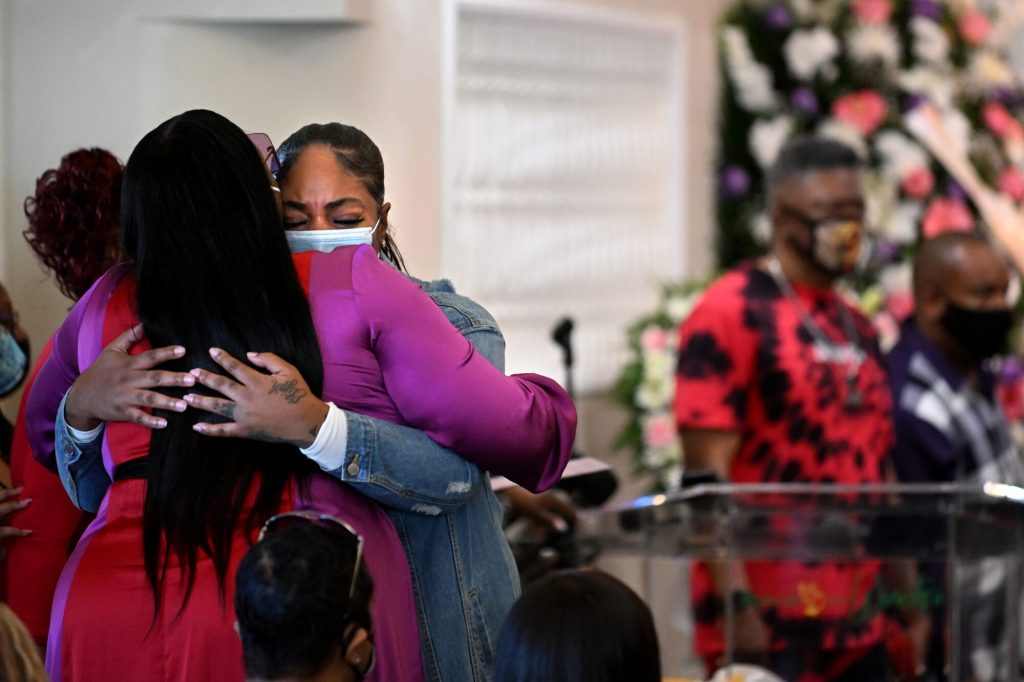
“Take your time, sis!” a few people shouted from their seats on Thursday as TV news cameras zoomed in on Solona’s pained face.
Tioni’s family understandably wanted to draw attention to the case — from law enforcement, from the media and from the public. But now that they have it, the question is how long they can keep it? And what else can come from it?
One of Tioni’s uncles, Marvin Kincy, called it a “blessing” — in the most bittersweet, desperate-for-a-silver-lining sense of the word — that more people now know about Tioni’s death than her life.
The Los Angeles Times spoke to the murdered girl’s relatives, who said she’d been recently traumatized by a man she met through social media; they allege that, for a while, he had pulled her into sex trafficking.
Senia Theus, Tioni’s cousin, told the paper the teen didn’t deserve to die this way.
“Everything made her laugh,” she said. “She was a bundle of joy, real bubbly and friendly. She was very goofy, happy. She was always smiling, even when she was crying.”
A GoFundMe campaign has been established to raise money to cover the costs of the teen’s funeral.
He was talking about the chances of finding her killer, of course, but also what L.A. County Dist. Atty. George Gascón acknowledged Wednesday during a hastily called news conference with other suddenly outraged elected officials.
“There is evidence indicating that this young girl may have been the victim of human trafficking,” Gascón said. He cited court documents with “information indicating that there were circumstances in which she was identified as a child victim of sexual exploitation.”
Some in Tioni’s family believe this. Others don’t.
Whatever the truth, Kincy sees the recent focus on Tioni as an opportunity to address the broader victimization of Black children.
Studies have long shown that traffickers disproportionately prey on those with intersecting issues, such as being targets of racism, transphobia, or being in the foster care system or living in poverty. Black girls, who have the added issue of being portrayed as more mature than they are, tend to be at the highest risk.
“We have failures that are not being attended to, and our children are being ravaged and savaged,” Kincy told reporters on Thursday. “I hope that we can do something to some of these things that are happening to our babies.”
I should note that, with Tioni, there is no evidence that trafficking had anything to do with her killing. And even if such evidence emerges, it doesn’t matter.
She was a child and a victim, not a “prostitute” who deserved some sort of punishment.
But those facts — spelled out in both federal and state trafficking laws — haven’t stopped idiots and the ignorant on Twitter from heaping blame and misplaced shame on Tioni since she was found dead more than two weeks ago.
That understandably has put many elected officials, as well as relatives and community activists, on the defensive.
During Wednesday’s news conference with Gascón, Harris-Dawson snapped: “If you are here to kick dirt on Tioni’s grave after she’s been brutally murdered, then we’ve got no business speaking to each other.”
Mitchell, who also participated, said she didn’t want the “adultification” of Black girls to dominate the conversation.
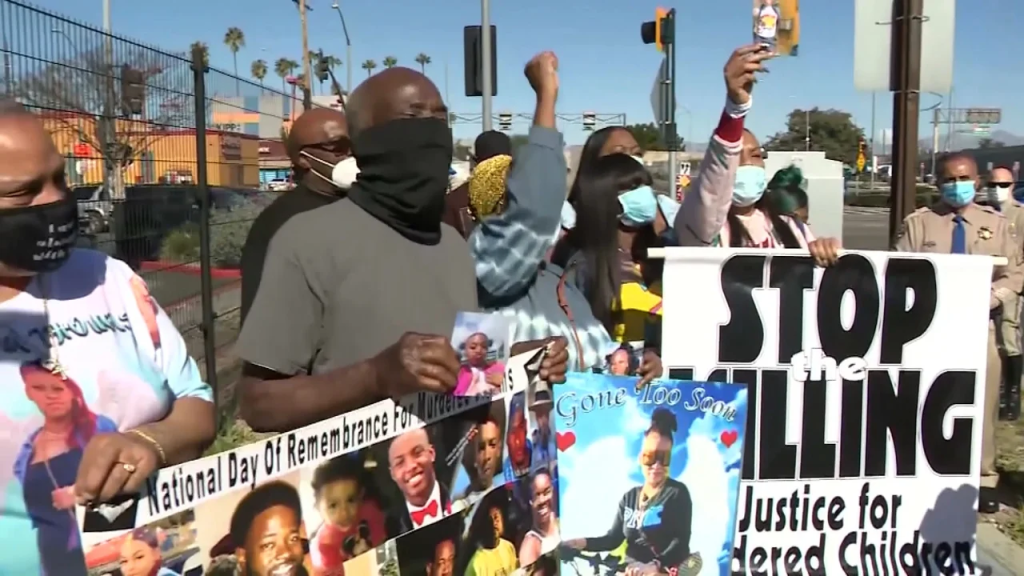
“We want you to think about her every single day,” Michael Dolphin, a great-uncle, pleaded into a cluster of TV cameras outside House of Winston funeral home in South L.A. “Please don’t let her be forgotten.”
This was on Thursday.
Nineteen days since drivers spotted the crumpled Black body of Tioni, shot in the neck and callously dumped like trash alongside the Manchester Avenue onramp to the 110 Freeway.
“We are here to talk about the murder of a 16-year-old Black girl. That’s all,” she said. “We have come together as elected leaders, as a community, to elevate her murder because of the trend we experience where Black women’s and Black girls’ deaths go unacknowledged, underreported, and too often unsolved.”
Mitchell told me later that she is still a bit on edge after spending years in the California Legislature pushing through laws that protect child trafficking victims from prosecution.
“I just didn’t want all of the baggage that comes with the human trafficking space to get lumped into this issue about this 16-year-old baby who was dumped on the side of the freeway,” she explained.
That said, like Kincy, she also sees an opportunity to start a much-needed community conversation about what trafficking looks like, who the victims and survivors usually are, and who is to blame — and to do it all in a culturally competent, nonbiased way.
“With her horrific murder (and) with the Super Bowl coming with the heightened attention around sex trafficking, we can lead all this into a really important message, and educate and save somebody,” Mitchell told me.
It remains to be seen whether any of this will happen.
For now, Councilmembers Price and Harris-Dawson have introduced a motion to examine how LAPD handles missing persons cases and violent crimes committed against Black women and girls, including how often such cases are solved.
Solona Theus also announced that the family is creating a foundation in honor of Tioni, but didn’t go into detail about its mission.
Activists in South L.A., meanwhile, are planning an antitrafficking march in the teenager’s name next week.
“For too long, many young African American girls — babies, 16-year-olds — have been snatched in the human trafficking,” Robert Sausedo, president of Community Build, told reporters on Thursday.
That has to stop, he told me later.
“We’ve got to call it what it is. We got to be truthful,” Sausedo said, stepping away from the cameras outside the House of Winston. “Our community has to take the blinders off. As they said earlier, see something, say something, do something. That’s what we have to get back to.”
HUMAN TRAFFICKING IN LA IS ON THE RISE.
LOS ANGELES (KABC) — The Super Bowl attracts people and money from all over the world, and law enforcement officials say with it there is also an increase in human trafficking.
That’s why a human trafficking prevention organization is using the event for a public awareness campaign.
There are signs in the terminals at Los Angeles International Airport alerting people about what to do if they suspect there is human trafficking around them. Law enforcement officials say it’s sometimes not easy to spot.
“It could be a young woman having her belongings taken away and coerced into working as a housekeeper until a debt is paid. It could be a child coerced into prostitution,” California Attorney General Rob Bonta said Tuesday at a news conference.
The organization It’s a Penalty works to prevent abuse, exploitation and human trafficking worldwide. The organization has been doing this at the Super Bowl since 2014.
“Last year during the (Tampa Bay) Super Bowl, 18 children from a similar list that we helped to distribute were identified in the hotels and motels,” said Sarah De Carvalho, CEO of It’s a Penalty.
“It is unacceptable that on any given day in our city that at least 10,000 people are being trafficked here in Los Angeles,” said L.A. City Council President Nury Martinez.
U.S. Customs and Border protection says it keeps a watch for those entering the country.
“Although though we are doing specific operations for the Super Bowl, we see this type of activity day in, day out, especially when there’s any type of high visibility or high revenue event in the city,” said Carlos Martel, an agent for U.S. CBP.
Officials say they also want people to be aware of the threat after the big game in February, and they have a message for any traffickers.
“Expect that we will catch you, and we will prosecute you and hold you accountable,” Martinez said.
https://www.cbsnews.com/losangeles/news/reward-in-murder-of-compton-teen-tioni-theus-jumps-to-110k
https://www.latimes.com/california/story/2022-01-29/dont-forget-tioni-theus-death-110-freeway
https://abc7.com/super-bowl-56-human-trafficking-los-angeles-inglewood/11509197
https://www.golfdigest.com/story/tioni-theus-case-remains-unsolved-murder-16-year-old-golfer
https://people.com/crime/reward-offered-for-information-on-murder-of-los-angeles-teen-tioni-theus
https://www.foxnews.com/us/california-los-angeles-tioni-theus-murder


Leave a comment